Showing posts with label Venus Zine. Show all posts

Saturday, May 12, 2007

Venus Zine; Spring 2007, Mother's Day


Yo mama, you rock!

Venus Zine gives a Mother’s Day shout-out

TO: LINDA KALWINSKI
FROM: GRETCHEN KALWINSKI, VENUS ZINE WRITER

Lately, I've been thinking about how über-DIY my mom is. I have fond memories of my hippie-parents building their own garage and cutting labels off clothing to protest advertising. But my mom's Lately, I've been thinking about how über-DIY my mom is. I have fond memories of my hippie-parents building their own garage and cutting labels off clothing to protest advertising. But my mom's Do-It-Yourself attitude wasn't just ’60s counterculture-nonconformity, it was necessity. She came from scrappy immigrants who re-used every plastic baggie, every piece of aluminum foil. Then her father died when she was 16, and DIY took on a whole new meaning for her family — making their own clothing, canning vegetables and fruit actually helped the 6 of them survive. During my childhood, she managed to work full-time while also making clothing and costumes for us kids, designing her own "Snugli" before they were popular, cooking from scratch, baking elaborate birthday cakes in the shapes of trains and animals, and still attending every game, every dance performance. Even now, when it's no longer financially necessary, she re-uses materials, gardens, and makes clothing herself. I believe that every creative urge, every cooking, yoga, or gardening impulse that my siblings and I have, we owe to the DIY street-cred instilled by my amazing mother when we were kids.

Wednesday, October 04, 2006

Sunday, September 10, 2006

Venus Zine, Profile of Julie Shapiro


Venus Zine / Fall 2006

Listen up!


Audio artist Julie Shapiro shares her thoughts on the current radio renaissance and shows how you can get in on the action

By: Gretchen Kalwinski

As managing director for Chicago’s Third Coast International Audio Festival, an annual and on-going celebration of documentary and feature audio works, Julie Shapiro is an expert on fascinating radio segments, but her girlhood listening was uber-ordinary; "Typical for a white Midwestern Jewish girl,” she laughs. “Billy Joel, Neil Diamond, Peter, Paul, and Mary." Shapiro began working with TCIAF in 2000. There, with executive director Johanna Zorn, she chooses radio documentaries for their competition, hosts "Listening Room" events, and travels to worldwide radio conferences, which has been life-changing: “It’s opened my ears and mind to audio work from all over the world, and stretched my mind about the power of sound.”

Shapiro did a college radio show at Transylvania University, where she played typical indie stuff of its time; Husker Du, Uncle Tupelo, The Slits. During the 90’s, she lived in Boulder, Colorado, Portland, Oregon, and Durham, North Carolina, where she worked in a record store and public radio station and played drums, which helped her become “more receptive to sound” and led to her appreciation for experimental artists like John Cage and Meredith Monk. "I got into composition and very beautiful spacey sounds."

An audio artist herself, Shapiro produced a tribute to model-horse collectors titled, “Are There Any More Rare, Plastic Ponies?,” which was picked up by TCIAF’s Re:sound. (thirdcoastfestival.org/resound_2005_june.asp). She also runs an audio-blog called notetheslantoftheovals.blogspot.com, and, apart from TCIAF, hosts Lissenup!, a listening event that began as a potluck, where she plays beloved audio pieces including one by Benjamen Walker (about a Darth Vader impersonator) and another in which Brooklyn student Natalie Edwards does a tongue-in-cheek investigation of prostitution. She’s currently considering new Lissenup! venues and the use of blindfolds to engage the senses.

Shapiro claims that we’re in a radio renaissance, evidenced by the number of younger people, journalists, and filmmakers exploring the field. “Radio's being recognized as an art form as well as a source for news and information, like in the pre-TV days. And, being surrounded by radio stories at TCIAF, I'm constantly learning--whether about blood feuds in Albania or one guy's encounter with a blind dog in Wyoming. Being able to help bring these stories to many more ears has been such a privilege. And a blast.”

Julie’s Advice on Producing Audio Segments

--Equipment
There's tons of used equipment online. The basics are: a microphone, recorder, and editing software, such as Audacity. (http://audacity.sourceforge.net/).

--Choosing a Story
Listen to many different styles of radio, and learn to be critical. (See transom.org, prx.org, and radiocollege.org.) Be careful with personal stories - they're often not that interesting to others. Make sure your story's really a contender for audio, and isn't just a spoken print piece. Think about stories that will surprise people or show them something new about the world.

-- Interviewing
Ask simple, straightforward questions. Watch for sounds that may disrupt conversations, like barking dogs, or humming refrigerators. It's ok to ask someone to repeat something or to stop wriggling in a squeaky chair. Always gather more tape than you think you'll need, and keep recording as long as possible. (Very often the best tape materializes after the "real" interview ends.)

--Putting Words Together with Music/Background Sound
Use the medium to its fullest! Sounds can play as important a role in telling your story as the narrative, [because] they're crucial to setting scenes. Music can add a lot to a listening experience but can also be a huge liability; don’t use the same songs you've heard in dozens of other radio stories. (No more Yo La Tengo!) In general the old adage "less is more" applies.

-- Editing
Writing is very different for radio than for print. Write like you talk - keep sentences simple and use words you usually use when you speak. Cut out every bit of tape you don't absolutely love. Then cut some more. If you're using narration keep it minimal and let the subjects of your story speak for themselves and move the story along. But don't leave out crucial information that'll help a listener understand the full context the story takes place in. Try to show, not tell. This is easy to do in radio, because you can actually include a clip of, say, a dog barking.

--Where to Send Your Finished Audio Segment
My advice to someone who wanted to get a serious start in radio would be to get an internship somewhere, not to start making stories cold and sending them around. That said, it's much better to contact any show or station you're hoping to work with BEFORE you produce anything, to find out what sort of work they're seeking; (most stations and shows' websites have contact info for this). Besides getting work onto airwaves, you can make a podcast and, or post it at prx.org, (a web-based marketplace for public radio pieces), where it can be reviewed by peers, and possibly picked up by a radio station. You can also just invite a bunch of friends over for a potluck, open a couple bottles of wine and beer, and have a listening party. ----GK

Friday, September 01, 2006

Venus Zine; Review of Neko Case, Joanna Newsom show

Venus Zine / September 1, 2006

Neko Case, Joanna Newsom, and Martha Wainright at McCarren Park Pool, August 24, 2006

Three performers crank it out in an abandoned pool, despite the ominous weather

By: Gretchen Kalwinski

John Lennon once described New York as the center of the universe, saying that, “If I was living in the time of Rome, I’d go to Rome. But I’m living now, so I’ll be in New York.” Freelance work being a bit slow in Chicago right now, I had this in mind when I hopped a red-eye to NYC to visit a pal. We got $2 sandwiches at the deli on the corner in her Brooklyn ‘hood, then hopped on the train to McCarren Park Pool where Joanna Newsom and Martha Wainwright were playing a 6 p.m. show headlined by the superb Neko Case.

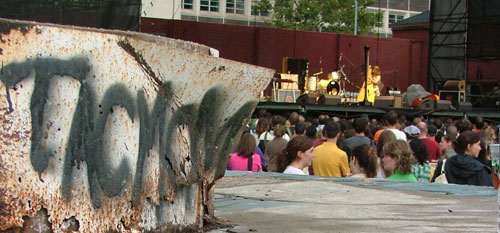
The pool, unused for 20 years and three times the size of an Olympic one, has only recently been used as a venue, (to much controversy, since Clear Channel is sponsoring the shows). We got there amidst threatening rain clouds, and plopped down on the crumbling edge of the old pool just as the rain started full throttle and the charismatic Wainwright started to play. She began with the pensive “Far Away;” “Green grass blades are all on fire / I own the crack that's in the wind,” and later did a rocky-version of the standard “Stormy Weather” in a small homage to the increasing sea of umbrellas and ponchos. She was sweetly apologetic about the weather, yelling to the crowd, “You guys are such troupers; thank you for staying…Wish we had bathing suits.” As she wound up the set with “Baby,” she noted that she wasn’t going to be touring for a while “cause I need to make a new fuckin’ record!”

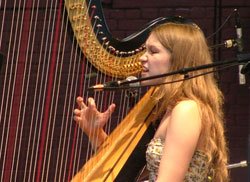
When Newsom walked onstage in her ‘70s sun-dress, the sky was clear, and the rain was drying from the peeling paint bottom of the decrepit pool. With a voice that the New York Times describes as “froggy, girlish” and my friend Meghan calls “Lamb Chop-esque” (the puppet, not the band), Newsom charmed the cheerful gaggle of hipsters with her weird, winsome songs, warbling in “Emily,” “I saw you last night by the river / I dreamed you were skipping little stones across the surface of the water / frowning at the angle where they were lost, and slipped under forever / in a mud-cloud, mica-spangled, like the sky'd been breathing on a mirror.”

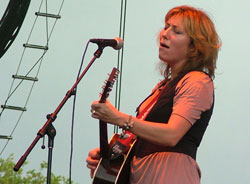
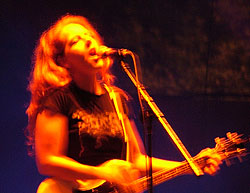
By the time Newsom finished, the sky was clear. It was almost too bad, we thought, because it could’ve been great to see force-of-nature Case belt out songs during a thunderstorm. But to no one’s surprise, Case was magnificent anyway. She played a nice mix from her albums Furnace Room Lullaby, Blacklisted, The Tigers Have Spoken, and Fox Confessor Brings the Flood. Almost immediately, she played one of my favorites, uh “Favorite,” and the crowd began visibly swooning as she sang, “I thought you were golden / I thought you were wise / Caught you returning / To the house you caught fire.” One girl, evidently moved by the spirit, started waltzing by herself in an empty part of the pool, and three art-girl rockers began dancing near her with a spazzy mix of mod and country moves. In “Set Out Running,” Case threw back her head to bellow, “Want to GET it all behind me / you know everything reminds me / can’t be myself without you / wanna crawl down deep inside,” and I realized that the only trouble with her performances is that she makes it look so easy that people think that if they throw their heads back and belt it out, they can sound that way too. Hence, leaving the shows, you often see folks mimicking her singing with the same lusty abandon but without her blessed vocal chords. Ouch.

Case was in punchy spirits and kept referencing unicorn tarot cards that were recently gifted to her. “The unicorn oracle is guiding every decision I make tonight — even my clothes,” she informed the crowd. “Unicorns have this sexual power that I think is harnessed from every 12-year-old girl in the world. Basically when they’re not humping their Pink Panthers, they’re looking at unicorns and they don’t know why….” We left the show elated and I’m catching tonight’s red-eye back to Chicago.

So, in short, my visit did just what I wanted:
Jolts of confusion, in a good way: check. (Newsom).
Goosebumps from a favorite performer: check. (Case).
Celebrity sighting: check. (Jimmy Fallon was at the show).
New music introduction: check. (First time hearing Wainright live).

Back to ye olde Midwest, and my big, affordable apartment go I, fresh with invigoration. Thanks and kiss-kiss, NYC.

Photo Credit: Meghan Hickey

Monday, March 27, 2006

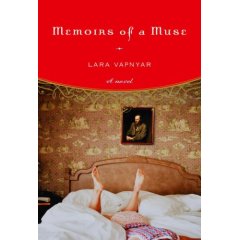
Venus Zine; Book Review; Memoirs of a Muse

Published in Venus Zine, Spring 2006


Memoirs of a Muse by: Lara Vapnyar

This first novel by Lara Vapnyar tells of a modern muse living in New York and obsessed with the great Russian writers, Dostoevsky in particular. The main character Tanya emigrates from Russia to the States, after deciding in adolescence that she is not gifted in her own right and asking, “could I fight death by living my life to the utmost degree?”

Tanya’s ideas about muses went far back into childhood, when her grandmother warned her about the trials and tribulations of the role. Still, Tanya is so impressed (and turned on by; she masturbates while thinking of Dostoevsky) the great writers that she decides to achieve immortality by inspiring another person’s work. Vapnyar’s lyrical style is notable for its fine detail, economy of words, and tight, crackling dialogue, best evidenced in the gender-interplay between Tanya and Mark Schneider, the writer that (in the absence of Dostoevsky), she takes up with. Mark is confident, with well-honed tastes in everything from coffee to clothing to architecture, and he enjoys schooling Tanya on the tenets of his sophisticated world, paying for her clothes and food, and letting her live with him. In turn, she listens to his childhood memories, discusses his work, brings him coffee while he writes, sleeps with him, and undresses the way he requests, until the affair turns up its eventual pitfalls.

However, the reasons why a modern-day woman would choose this role instead of pursuing her own path, are left unanswered. After all, which of us in adolescence had a declared passion, other than the prodigies or geniuses? Why did Tanya lack the curiosity to find and develop a talent of her own, rather than glomming onto some dude? We never discover why Tanya decides on such a lazy route at such a young age. To be sure, muse-dom is a complicated notion to tackle, especially since muses are usually female and have roles similar to that of “kept” wives and mistresses. In the latter half of the book, Tanya begins to understand what her role entails, and Vapnyar handles the contradictions of a muse’s role with intelligence and dry humor and earthy, womanly insight.

-- Gretchen Kalwinski

Friday, March 10, 2006

Venus Zine; DIY article, Guerilla Drive-Ins

Venus Zine
Spring 2006

When was the last time you watched a movie with a bunch of strangers under the stars? Drive-in movies have been phasing out since their heyday in the ’60s and ’70s. They were popular because of the inherent romance in watching a film under the stars, snuggled up with siblings, friends, or paramours under blankets. Contemporary technology allows an extremely high-quality home entertainment experience, but it has come at the cost of estrangement from fellow movie-goers. So some radical folks began their own “guerilla” drive-in movie collectives as a DIY way to enjoy the intimacy and communal nature of drive-ins, with the added bonus of being able to show whatever films they damn well pleased, usually free of charge!

One of the most organized groups is the Santa Cruz Guerilla Drive-In in Santa Cruz, California (guerilladrivein.org). In 2004, they started showing films such as “The Third Man” and “The Gleaners and I” on vacant walls of abandoned buildings for friends and strangers to enjoy. The Santa Cruz drive-in doesn’t actually involve cars, however — movie-watchers bring lawn chairs and blankets to the given location, where they view the film via a projector and high-powered speakers.

The nation-wide MobMov collectives — short for Mobile Movie — (mobmov.org) take the term “drive-in” a bit more literally. They use technology similar to that used in ye olden days, utilizing an FM transmitter to broadcast the movie’s sound into car radios, so that, as organizer Bryan Kennedy notes, “there is no sound pollution at all.” Because of this, says Kennedy, they are rarely bothered by law enforcement. He thinks that the MobMov idea (now active in 12 U.S. cities) has caught on because of “the sense of community you get when you come, the experience of sharing something unique with strangers.”

Most groups have guidelines for if and when they are approached by police or upset neighbors, since, as the Santa Cruz group notes, “good neighborly relations are an important element of DIY culture.” In Kennedy’s experience, a law enforcement confrontation “has never happened--if it did, I would just show them my papers, and if they asked that I stop the movie, I would.” The Santa Cruz group notes that the best defense to hassling from cops is to “know the laws restricting amplified sound and rules restricting access to public space after dark, and have people on hand who have experience with non-violent communication.”

Most collectives agree that the real issue at hand is one of public versus private space. The Santa Cruz Guerilla Drive-In notes on their website that; “Beyond showing great movies and bringing a broad community together, our mission is helping to reclaim public space and transforming our urban environment into the joyful playground it should be.”
Kennedy from MobMov echoes the sentiment, saying, “A drive-in is much more than just a movie projected on a wall like at your local cineplex. In a cineplex, you have this huge public space, yet interaction is frowned upon, so it is not appreciably different than watching the movie by yourself. In the drive-ins of old, some people would roam around and visit each other, while others would sit in the privacy of their car, unperturbed. With a drive-in, you can select the level of interaction you want. It’s a much more customizable experience.”
Plan Your Own Guerilla Drive-In
Location, location, location. The Santa Cruz group suggests that you scout out a dark location near a smooth, light surface, in areas that are either full of warehouses or under bridges to minimize the chance of interruption.
Zee technicalities.
Determine whether you’ll use speakers or a radio transmitter, and then scrounge for speakers, amplifier, and projectors. Additional technical information about projecting films can be found on the Santa Cruz Guerilla Drive-In and MobMov websites.
What ya gonna watch?
Make a list of films to choose from. Some groups have subversive or political themes, while others make a specialty of documentary or foreign films.
If you build it, they will come.
Let people know when and where the screening will take place. This can be done via a website, e-mail distribution list, or fliers on local bulletin boards.
Dealing with authorities.
The Santa Cruz group always has a few “cop tamers” on hand to serve as police liaisons. He explains, “A good cop tamer has experience with non-violent communication and a good understanding of applicable laws.”

Sunday, January 15, 2006

Venus Zine; Author Interview; Elizabeth Merrick


Interview with Elizabeth Merrick, novelist, for Venus Zine, January 2006.

Elizabeth Merrick
Novelist Elizabeth Merrick chats with Venus about her new novel, Girly, starting her own press, and remedial math

By: Gretchen Kalwinski

Brooklyn-based Elizabeth Merrick is a writer, editor, writing teacher, creativity consultant, independent publisher, blogger, feminist, and founder of two reading series. Her personality is representative of New York City’s energetic power and creativity, and though she purports to be “deeply lazy,” it’s hard to buy the claim. Here’s an extended laundry list of her accomplishments—after receiving a BA from Yale, an MFA from Cornell, and an MA in Creativity and Art Education from San Francisco State, she founded and began curating the well-known and women-focused Cupcake Reading Series, followed by the launch of the Grace Reading Series in September 2005. She is the editor of the upcoming Random House anthology called This is Not Chick Lit, a collection of new short fiction by literary women authors, (read: authors NOT writing with a fashion-mag mentality). She has taught classes at Cornell and NYU and began her own writing school several years ago, where she teaches students in the Brooklyn area how to tap into their intuitive and creative powers, along with conveying her extensive knowledge of technique and craft. The cherry on top is that she just started a small press called Demimonde Books, with its initial release being her first novel, Girly—a 524-page tome that was published in December 2005.

Girly takes place mainly in rural Pennsylvania, and depicts the unfolding of events in several women’s lives, most primarily the lives of the Hart family women, made up of Racinda Hart, her psychologically damaged sister Ruth, and out-of-it mother Amandine, who became a born again Christian when Racinda was a baby. The themes of Christian fundamentalism, and spiritual and sexual awakening pervade the novel, which was called “smart, sharp, and on the edge” by Hannah Tinti, the editor of the brilliantly unpretentious One Story Magazine. When I talked with Merrick, she was relieved to finally have a few days off, after a year of 12-hour work-days spent getting Demimonde Books up and running.

In Girly, there are 7 different points of view with women’s voices being the dominant ones. Was it your intention to use so many points of view from the get-go, or did that just gradually evolve during the writing process?
It was definitely my intention. Part of writing it was that I was very much interested in NOT writing a typical first novel or just write a novel to write one. I wanted to write something that resembled the books that blew me away. One of those authors for me is Louise Erdrich, who is Faulkner-ian; I actually think that she takes Faulkner to the next level. She is commanding and I loved the sense of a community telling a story—this community of characters. I loved finding things from one character that the other characters don’t know about. That to me was the most interesting part, interesting part of the endeavor of writing a novel. I really loved that part of it.

You said you wrote Girly because you were looking for a book on the shelves that you wanted to read, and couldn't find it, so you decided to write one. So I wanted to find out what you think Girly offers that other books might not?
In the late 90’s, publishers were putting out a lot of amazing fiction which isn’t as true now—it’s gotten a lot more corporate. But the book that I wanted to read was one of these epic books (that are mainly written by guys) that are formally ambitious and long, like David Foster Wallace for instance. I wanted to see a version of those books by a woman of my generation, and one that took into account Toni Morrison and Louise Erdrich; our epic women writers who are amazing and who have carried literature a step further into the 20thth century. I couldn’t find that book, so I tried to write it and am not sure if I got there, but I tried and it’s a decent effort and people seem to like it well enough. I think Girly is challenging in certain ways—the language is dense, for instance. I tried to make it beautiful but hope that the story still grips you. A lot of times there is not a category of books like that by women. There are women writers who are in their 40s or 50s who have been writing dense epic books forever, and they aren’t nearly as well known as they would be if they were men. Joanna Scott is one who comes to mind—she is amazing but yet a lot of writers and a lot of people in publishing aren’t aware of her work. Although, some young guy writers are often aware of her work. I think David Foster Wallace has said that she is one of our best living writers. And the same thing happened with Paula Fox; she is in her 80s now, but she only got back into print because Jonathan Franzen introduced a book and made a big fuss over her. So there are these women producing serious literature but who fall through the cracks; with women artists, that’s the way it is, you know. That’s what the Guerilla Girls are making such a big noise about, and you spend decades of your life battling this stuff to whatever degree you can.

So, you’ve got a big presence on the Web—I especially enjoy the “Remedial Math” section of the Grace Reading Series Web site, where it talks about the fact that the New Yorker bylines are 79% male, versus 21% female and it lists different statistics of male versus female bylines. You’ve also stated that part of the problem is that literary men simply don’t enjoy reading literature by women, and I just thought that was fascinating. Can you talk more about that? I haven’t done a study myself on that but there was an informal poll, I think in the UK Guardian, where they asked men what books they had recently read and the guys came up with books by men, you know, basically the men had read books only by men whereas women had read books by men and women. I’m okay with this. I think that if men don’t want to read books by women that’s okay with me, they’re grown-ups, it’s fine; it is not my job to be telling anyone what kind of taste they should have. I am in no way interested in that. What I am interested in is equal pay for equal work. And that is why it always comes down to those numbers. And that 21% at the New Yorker is a very strange status quo because it is representative—it really does tend to be only about 20% women across the board. And it’s fascinating that it is so consistent! Even with the young upstart literary magazines that are certainly not making a lot of money and are very much not part of mainstream pop culture, it's still only about 20% women. And I can tell you right now that people paying for MFA’s are more than 20% women. And English majors certainly make up more than 20% women. There’s a weird disconnect that happens when we get to the job, and the paycheck and the authority of the byline.

I think all those figures you just mentioned point to how difficult it is financially to be a woman writer, because, like you said, many women are paying for writing degrees and not getting any work—how do you work rent into that equation?
Yeah I started looking at the bylines in graduate school and counting them because I was thinking; “Wait a minute, what’s the plan?” It’s not like it was some political cause. It was very practical—it’s like I need to pay rent when I leave graduate school and was thinking, “This is not a very good plan!” You see it’s just thematically so predictable, and then you start to realize that it’s bigger than just you…I know tons of freelancers—brilliant women—paying rent by writing for Cosmo Girl or Elle Girl when they want to be writing for Harper’s and they should be writing for Harper’s, and Harper’s would be a hell of a lot more interesting if these women were in it. But for whatever reason that didn’t happen. I think that Harper’s is especially insidious on the issue of women’s bylines. I have a friend that told me that the gender ratio of men to women over at Harper’s is like a Star Trek convention. [Laughs].

This might be a whole separate conversation, but do you think that literary men are perhaps less interested in reading literature by women because women tend to tell the stories of their lives a bit more—not even necessarily autobiography—but stories adjacent to the lives they’ve lived?
It’s possible, but the thing is, of course women should be telling those stories! It’s been only 35 years since the 2nd wave of feminism. Women didn’t get to go to Yale until 1969. So it has really only been this one generation and yet, the rightness of the idea of men and women being equal and being equal partners in relationships etc, etc. is so true and so right that [society] has adjusted to that very quickly because things simply work better. But the changes are so huge that it's a lot for people to deal with, I think men especially. So, because it’s only been 35 years, of course we need to tell all these stories, because they are so important and fascinating, but these stories are not valued yet. No one cares what happens to a 12-year-old girl, really. And that is very sad, but very true if you look at the policies in our country, especially where children are concerned, and you look at the gender inequalities that still exist. It’s a blind spot that we have. And what are valued are male stories—it’s just still kind of true. And guys naturally want to write their own experience and read their own experiences, and—lucky them!!—their experiences are more valued! And win awards! And are granted authority. And it’s interesting because we just got the news today that the James Frey book is largely fabricated. In his book there is vomiting and serious drug use and crazy arrests, and that book was considered serious literature. And it was so funny to me when Girly came out, because as a teacher, I think I give my students optimism and belief and trust in their intuition, all that kind of stuff. I’m a bit airy-fairy and part of Girly was narrated by a goddess and the book has this very strong spiritual belief. So it was really funny to me, this kind of literary Pollyanna in my everyday life that the reviews of Girly say things like “it’s so dark with massive drug use and filthy sex.” And there is not actually that much of that stuff in there! I mean there is some drug use but people mostly smoke pot, and it was very funny to me that because I’m a woman the reviews read that way and people are sort of shocked and reviewing it like, “it is so dark and bleak and nihilistic.” Whereas for a guy, reviews for that kind of book with dark themes read like, “he’s the next inheritor of literature after Dave Eggers.” So I got a big giggle out of that because my regular life is so herbal tea and optimistic, and then I got to be like this deep, dark, hot Sylvia Plath lady with those reviews.

Your book is being published by Demimonde Books, a press that you started up, and the stated mission is “to focus on risk-taking literary prose of exquisite quality.” I was wondering how you decided to start your own press, and if you have a staff or it’s a one-woman show at this point?
Oh my gosh, what an adventure! I just had my first week of slight downtime in a year because Demimonde Books has been taking 12 hours a day, which is not my natural bent; I am actually deeply, deeply lazy. I recently took a little personality quiz, one of those Myers-Briggs things and found that I am the personality type that is introverted and really spaced out and idealistic and on another planet, the kind of person that can’t find their keys. So I was laughing so much because starting a press is all about all those kinds of details, the business end of things and organization. And I have the reading series and my workshops and have way more going on than one person who was practical about how much person could actually do at one time. But I really wanted to do it all, so I just did it, and people really showed up to help. I have people helping out with publicity, and Emberly Nesbitt, who is an editor of the Grace Reading Series, is also an editor at Demimonde and we’re looking at manuscripts now, which is a really fun generative phase as opposed to production, which is getting everything out and at the right time and the right phase. I also have some administrative help at the press and there is a lot of crossover with the Grace Reading Series. With my workshops, too, it can be hard with the phase we’re in to find a space that celebrates gorgeous writing but that doesn’t have literary one up-man-ship which I cannot stand. I am not interested in a “literary lifestyle”. I am interested in the writing, which to me is something that is really earthy and connected to all the old stories and it has to be funny and has to be a place where there isn’t ego, and those are kind of ugly and uncomfortable places sometimes, but can also be fun and delightful places. All of that is really different from a publishing cocktail party, which can be fun, but is not where I live and thrive.

You have three more books coming out on Demimonde in 2006, right?
Yes, we’re going to publish three books, but it might carry over into 2007. Something that I’ve learned about publishing is that it’s always better to wait until you have all the pieces, so it’s looking more like late 2006, early 2007. Plus, I found this really amazing literary cookbook, actually sort of a dirty literary cookbook, by someone who lives in Park Slope and works in publishing. It is these sexy recipes with a literary bent, but we’ll see what happens.

Since your book is the first published by Demimonde and since it runs approximately 500 pages, I was wondering what the editing process was like?
It's been edited by a few different people, one of them was Emberly, the editor at Demimonde. People were really generous with their time in editing it; I was really grateful. And actually, the director's cut is 700 pages. But this 500-page version I'm pretty happy with. So, the Grace Reading Series has been going on since September 2005, is named after your grandmother, and has featured Beth Lisick and Jill Solloway among others.

What is unique about the reading series other than the fact that it is women-centric?
Well, the series is only once a month with one or two writers, so that there is a clear vision of trying to focus on literary books by women that are crafted with care and thought, and that are substantive. It is a way to focus attention on them because they don’t get it in bookstores, and they don’t get it in book reviews, (we have statistics on this on the Grace Web site—most of the review space goes to male writers). And a lot of attention goes to commercial women writers and “fashionista lit.” So, it’s an activist wing in many ways, without being dreary, like a fun activist wing. Also, we just started a book club where we do review recommendations of 3 books a month. We started doing that because I was finding that everyone—from my friend who is a comp lit major at Yale and conceptual artist, to my very cool hairdresser, to friends in academic publishing— were telling me that they’ve given up on contemporary fiction because, “every thing I happen upon is crap.” This has to do with publishers being so big and corporate and kind of out of touch with the community of serious readers and just trying to sell the latest Paris Hilton book or whatever. This seemed like a shame to me, because there are still wonderful books being published, but there is a disconnect there. So Grace is a way for people to find out what those books are and how to get them so that they can start reading again. It was my little way to do that.

You have a writing school that is run out of your living room?
The writing school just turned 2 years old. It’s grown a little bit, so now I just have the advanced classes at my home, and the rest are taught at a location in Park Slope and SoHo sometimes, too.

What is the demographic of those classes?
It’s funny—it’s mostly women. For awhile I wondered if that was because of all of my other endeavors, but I think it also has to do with what I specifically offer to students. The big thing I give to people as a teacher (underneath all the craft and everything else), is how to quell through the terror and doubt of “Why do I have any right to say this at all? Why would anyone ever be interested?” Women feel that and it’s paralyzing! And part of the reason is that stories about 12-year-old girls DON’T win Booker prizes.

Right; their fears are justified!
...And they DON’T see those bylines in the New Yorker. And maybe they’re not thinking about that consciously but that is what they’re battling with. And so all those years that I battled with that in Girly, to get to the point where I was comfortable with my own authority as a writer, I learned things that I am able to help my students with. And it’s so rewarding to see it work and it’s amazing to see women start to progress and trust themselves as writers. Everything is kind of condensed down to this foundation class that I require students to take first. When I started teaching these workshops that is what I came up with, and it is a progression that takes you through both getting to your creativity and opening up that intuition. Then very quickly in the 3rd or 4th week I move into all of the craft stuff and progression on a curriculum, which is pretty much wholly missing from workshops in academia! Really, no one gives you this stuff! Emberly and I laugh all the time, because all of the years in workshops, no one ever told you how to do that stuff; you had to figure it out on your own. You’d go to workshops and people would critique this or that but then you never knew, “OK, how do I then go home and do that?” So, there was no way I was going to teach an insipid, ineffectual writing workshop; it had to be really essential information that was going to work. So I boiled it down and it works—people become productive writers who know how to write stories that people want to read and are able to craft a beautiful sentence. It’s almost to the point where I’m present, but the process carries the students along almost on their own, once they get this information.

Seeing your students’ progress must be ridiculously rewarding for you.
Oh, my god! My crew right now is really working hard, and they recently had a reading at Lolita Bar where they each read for 5 minutes and all of their friends came, and I was so blown away that I could not speak. And they are so much better than most of these review copies I get—everyone was electrified, and I was like a dorky mom cheering at a game or something.

How long have you been writing—did you write as a kid?
Well, I think writing was always my natural strength. But, because it was something that came easily and got me things like good grades in English, I didn’t trust it. I kinda wanted to be a punk rock bassist and then I was a film major. But then I figured out that you had to be really extroverted for those things, and deal with all of these physical irritations like lighting and microphones. So, after trying a bunch of different things, it became clear to me that I wasn’t just writing because of praise or whatever, and I could do what I wanted, and be as expansive as I wanted and not have to lug around a camera and mic all the time.

Speaking of music, I know you like Sleater-Kinney, Bjork, and PJ Harvey; do you listen to music while you’re writing?
In the early phases, yes. I’ll drive and drive and drive and the stories will show up. And then at a certain point, the music will start jangling and I’ll hear the characters speaking, and I’ll have to turn the music off. What the music does is get me into my right brain—all of the intuition stuff—and then once I can access that and the story is there, I turn it off. The music for me is the way to feel unconstricted .

Was there anything else you wanted to talk about?
I'm glad we got to talk about the women writers who have gone before, because for me, that is where the sanity is. Even Demimonde is linked to that—it's all part of a larger picture. Also, I wanted to mention that I think magazines like Venus are so important because that is a place for curious women writers, especially young women writers to write about and hear about a broader range of topic beyond “how to take a bath” or whatever the features are in the women’s magazines. I just think that it is so important to have these spaces because that is where women really get to express different ideas and ways of life. I’m so grateful for what you guys are doing, because a lot of women have no stuff that is in magazines like Venus or Bust. I taught a class at Cornell titled “Women’s Secret Stories” and one woman in the class was from Louisiana and had always been anti-choice and I started bringing in magazine articles for the class about women, like Margaret Cho for example, and her world was turned upside down.

Right, and once you plug these women into stuff that they don’t hear about in the mainstream, give them those tools, you’re helping to bridge a gap to everyone they know, too.
Then, the really fun thing is that what they then come up with! I experienced the same thing with the writing of Girly. I would read every interview with Margaret Cho and listen to Sleater-Kinney and PJ Harvey, and every little bit of something like that, that I absorbed it like it was encouragement to me, that, “Yeah, you CAN do something that is not going to fit into ‘Must See TV’.” And now, from all of those women doing amazing things, things like Grace are formed, which is another place for women to come together. For me, I don’t know if I could survive the Bush administration if I wasn’t working hard on this stuff. It’s the only way that I can think of in my own little way, to push for an alternative version of the story.

For more information, visit elizabethmerrick.com

Monday, December 05, 2005

Venus Zine


New Year’s Celebrations 2006: Off the beaten path

Some festive DIY options for ringing in the new year without breaking the bank

OK, so it’d be easy to head to your favorite bar or your neighbor’s New Year’s Eve party and nurse a splitting headache the next day while you crawl around looking for hangover food. We’ve all done it before and we’ll do it again. However, if you’re broke or simply looking for an alternative to the standard bar or hotel New Year’s “bash” — which is, let’s face it, usually overrated — Venus is at your rescue with some creative alternatives for welcoming 2006.
FOR OUTDOORSY TYPES OR THOSE ON A BUDGET
Gaze at the moon and stars reflecting off the water
Find a beach, any beach. Bring friends and arm them with cheap champagne and lots of blankets — or hats and gloves if your beach happens to be in a cold climate. Build a fire if you think you can get away with it, watch the stars, and wish upon them. Count down to midnight. Dance madly on the sand when it arrives.
Enjoy a mob-ridden light show
In many cities, there are free fireworks shows. Although the idea of a large crowd may be off-putting, it may also be a great way to feel the humanity. Ring in 2006 with an elated mob.
See a quirky theater production
Many theaters don’t have shows on this night, since they don’t want to force actors to work on a holiday. But some eclectic, smaller theaters put on a show for the fun of it. The Neo-Futurists in Chicago, for example, offer a $30 theater-n-appetizer combo for their brand of speedy, off-the-wall, somewhat-improv short plays.
Gaze at your navel
Yoga studios all over the country host non-alcoholic New Year’s Eve nights that include yoga and meditation, chanting, drum circles, Bikram sessions that end at the stroke of midnight, massage, and Reiki. If you are tired of waking up with the dizzy residue of heavy partying on the first day of the New Year, check yoga studios and spas in your neck of the woods to find out how to have a holistic, conscious beginning to 2006.
PARTY IDEAS
Not feeling like investing a Benjamin to drink the night away at a bar on NYE? You can put that money toward a marvelous party with yourself as the generous host. Your guests will thank you for saving them money, and you will be proud to display your DIY talents at the last/first party of the year.
Create a residential transformation
• Nothing says it’s the holidays like a whole lotta lights. Swear against switches and lamps tonight and set the room on fire with strings of lights strewn across tables, bookshelves, and chairs. They cost little but they add a huge element of merriment and celebration. Also, decorate surfaces with glittery confetti to give things that extra party feel. It doesn’t take much effort but you’ll feel like you’re in a sparkly world that looks nothing like the home you’re used to.
• Most of us have at least two screens in our homes: a television and a computer. Don’t save the TV for the last 10 seconds of 2005. Use it in your design scheme tonight. Display some DVDs on those screens. Choose some with interesting visuals (anything from an old Japanese movie with big robotic monsters to the work of Michel Gondry) and play them on mute.
Set the mood
Weren’t iPods created to show off your awesome musical tastes at a party? Create a splendid playlist for your friends to enjoy and admire you for. Or else, make it seasonal with some jazz — Ella Fitzgerald Wishes You a Swinging Christmas always does it for me!
Class up your beverage
Whether or not your guests want to get liquored up tonight, they can still look great sipping (or chugging) it down!
• Make it a sweet year by wetting the rims of their glasses and stick on some sugar crystals or crushed-up peppermint candies.
• A little garnish goes a long way: Keep some maraschino cherries and orange, lime, and lemon slices handy for whenever someone wants a cocktail refresher.
Tasty morsels to chase the hangover away
You can always go with the standard crudités with dip or hummus, but why not spice things up a bit?
• Head for the heat-and-serve part of the supermarket for this one. Just buy those pre-made crescent rolls (usually in the dairy case), and use the dough and your imagination to make some interestingly shaped hors d’oeuvres. Sprinkle on some diced bell pepper, onions, and cheese, or stuff them with broccoli and cheddar. Then put ’em in the oven for the appropriate time.
• Another not-from-scratch idea: Some supermarkets, like Trader Joe’s, sell pre-made pizza dough. All you have to do is spread it out on a pan, apply olive oil, add some sauce, cheese, and your choice of veggies or meats. Pop it in the oven and when it’s ready, cut into squares. This one can be easily veganized.
• If turning on an oven is too much cooking for you, how about providing your guests with some homemade trail mix? You can make all sorts of mixtures — sweet and savory — and set them in bowls throughout your digs. For instance, jazz up trail mix with chocolate chips and almonds, mix up a bowl of saltiness with pretzels, peanuts, and rice crackers, or indulge your sweet tooth with a bowl of chocolate chips, toffee bits, and marshmallows.
• And, hell, everyone loves a potluck!
While away the time
It’s always fun to exploit the New Year theme. Here are some ideas of how to get your guests jazzed about the year ahead:
• Give everyone a few pieces of paper. Tell them to make up a few “top 10 of 2005” list ideas and write them down. For example: “top 10 hook-ups of the year” or “top 10 new foods I tried this year.” Put them all in a hat, shake ’em up, and have each guest choose one and list their choices.
• Reserve one table as a shrine to old man 2005 and another to welcome baby ’06. Have your guests bring a brand-new candle and a relic of 2005. It could be a magazine cover showing Angelina Jolie and Brad Pitt or the Gwen Stefani CD they wish they hadn’t bought. Place the objects on the 2005 table surrounded by pre-lit candles and put the new candles on the 2006 table. Once the clock strikes midnight, blow out the candles on 2005 and ignite 2006 with the candles your guests have brought.
HOMEBODY OPTIONS
Host a Steve Carell Fest
Who didn’t love Steve Carell playing Brick Tamland in Anchorman and Andy Stitzer in The 40 Year Old Virgin? Watch the two DVDs back to back with your other Brick-and Andy-loving friends with snacks and drinks. Try to remember the best lines from the movies and bring in the New Year by speaking “Brick and Andy.” For example:
“So how was your 2005?”
“Yeah, there were horses, and a man on fire, and I killed a guy with a trident!”
Another example: “What happened to [insert girl’s name]?”
“That girl was a ho … for sho’.
Whip Up Delectable French Drinks
Make do with cheap beer, white wine, or champagne, but splurge on some strawberry or cassis (black currant) liqueur to concoct quasi-luxurious drinks with some friends. There are no strict rules for how much liqueur you use, so just mix according to taste.
• The French combine strawberry liqueur with beer to make demi-fraises, which sounds bizarre but is uniquely tasty. Even those who do not normally care for the taste of beer may take a liking to the demi-fraise. It is possible to be creative and compose a demi-cassis or demi-any fruit.
• For a kir, combine a bit of cassis liqueur with white wine. This cocktail is usually enjoyed in France before a meal, but armed with a kir, you can bring in the New Year with some sass and class.
• Or take it up a step and ring in the New Year with a kir royale by combining cassis liqueur with champagne. The New Year will look good with pinkish-purplish, sweet champagne.
SOME OTHER EXAMPLES OF DIY AND HOMEBODY IDEAS FROM CORRESPONDENTS AND COMPADRES ’ROUND THE GLOBE
• "I was born and raised in Hawai'i and when midnight comes around, tons and tons of firecrackers are set off. The tradition is probably due to the large Asian population on the islands, and so many firecrackers go off that a lot of the time, there are asthma and air pollution warnings. I remember one New Year's where the smoke was so thick, it was dangerous to drive. The next day, there's usually a story or two on the news about a firecracker injury and someone being taken to the hospital on account of their hand being blown off." — Kristina, Chicago
• “In south Dallas they fire their guns in the air — oftentimes they sound quite automatic. My family stands at the door but we don't step out — we want to hear, but not get impaled by falling bullets.” — Robert, Dallas
• “I was in Edinburgh, Scotland, a few years ago for Hogmanay [Scottish street festival with music and fireworks], which should be known as Snogmonay, since everyone on the streets kisses (snogs) each other and teenagers are puking up hard cider in the parks. Thousands of people turn out for it.” — Meghan, Brooklyn
• “I remember one New Year’s Eve, where I was a driver in a car full of friends. I forgot where we were heading, but we passed several small towns along the way — it was a good two-hour drive at least. During that trip, as we passed each town, we got to glimpse their firework display from the interstate. It was really quite an experience — town after town, each one lit up along the way. Definitely something I'd recommend, although it sucked to be the driver, as I missed a lot.” — Felix, Chicago
• “Last year I went to a huge AA party in SoHo where only soda and water were served and we danced the old year away to a DJ in a church basement. Celebrity sightings and the like — can't tell you who, of course. Got hit on by a guy in Debtors Anonymous, who told me I looked like a Russian princess.” — Kasia, New York
• “I joined the Chicago polar bear club [a group of people who jump in the icy water of Lake Michigan] a few years back, and the year before that I went canoeing.” — Erik, Chicago
• “My mom always made pigs-in-blankets at home, and then my parents bark outside at midnight. My sister and I, of course humiliated, would stay inside, content with all the mini hot dogs and canned croissants.” — Mordecai, Chicago
• “I’m not sure what we’re going to do for New Year’s Eve, but I bought the DVD for Kylie Minogue’s concert for a friend, so we’re gonna pre-party it up with Kylie at home.” — Amy, Chicago
• “My family and I pile into the basement best-suited for a party and eat tons of food before we dance for hours. At midnight we count down and then congratulate each other on a year’s worth of living gone well — decided by the amount of life left in us. All the while, the young’uns are trying to steal Jell-o shots only to realize how much of an acquired taste they are. We then dance and drink until we are all spent, and the next day, the strong will gather to eat the leftover food and regale in stories of the previous night.” — Tony, Chicago
Whatever kind of New Year’s merriment you choose, we at Venus send you good tidings and well-wishes for 2006.

Wednesday, November 23, 2005

Venus Zine; Interview; Edith Frost

Venus Zine, November 2005
The Chicago musician's new album, It's a Game, evokes a country carnival by Gretchen Kalwinski Edith Frost’s brand-spanking-new album, It’s a Game, the long-awaited follow-up to 2001’s Wonder Wonder, was released by Drag City on November 15, 2005, with a corresponding CD release party at Chicago’s Hothouse and a glowing, full-page review in the Chicago Tribune.
Known for her heartbreak-y tunes and melancholy, wistful lyrics, Frost is used to fielding questions from journalists about her relationships. She's matter-of-fact about a recent breakup on her massive blog, edithfrost.com, and a recent post expresses frustration that her relationship status gets so much attention. I chatted with Frost at her Chicago apartment in the Ravenswood neighborhood, where we drank Hefeweizen and chewed the fat about Chicago weather, the new album, blogs, stupid jobs, and pets.

So I’ve listened to It’s a Game, and I wanted to tell you that I think it’s so beautiful and melodic.
Thank you. … I like it too.

Do you have a favorite tune on the album?
Well, “Emergency” and “Playmate” are the ones that — when we were talking about what to put out on mp3 — we talked about showcasing. I’d been thinking about those two, and then one day Rian Murphy [Drag City’s head of staff] just yelled out in the studio, “Everybody, what’s the one?” And they were like, “Emergency! Emergency!” “Playmate” is a super old song; it was written nine to 10 years ago. I actually played that when I first starting playing out with my own songs, when I was in New York.

I was wondering if you have daily rituals for getting work done, or do you wait for inspiration to strike?
Rian says that I used to do that a lot more. When he met me and when we were recording Calling Over Time, I guess I was sitting with a guitar every single day. I was just sitting every day playing folk and country tunes for the sake of playing. I really don’t do that any more, like I used to. I don’t practice regularly.

Is it because it is so second nature to you that you don’t even need to make a ritual of it?
No, I should be doing it! I should, because then I’d write a lot more songs. I should definitely get back into that habit. Because if you’re dealing with the music every day, then something is more likely to come of that than sitting and watching All My Children. (Laughs) Well, you never know, there might be something you could use from that show? (Laughs)
There was a quote from the show today that I loved. Something like, “You got me pregnant and now you’re dumping me?!” In that one, the guy was a sperm donor. Like, he was like the family doctor, so he didn’t actually screw her. He impregnated her by insemination. Still pretty shocking.

When I'm home writing during the day, I’ll turn on the judge shows sometimes. They’re a problem for me.
Those I can get sucked into, those and Elimidate, because it’s always on after South Park, which I love. I Tivo that, and so I get Elimidate at the end. At some point, I got sucked into the reality shows. My theory was that I’d start watching all of them and eliminate one every week until I’m down to the One True Reality show that I really love, but I’m still Tivo’ing all of those. My favorite is Big Brother. I don’t really watch-watch them, but I just work right here on the couch and have them on out of the corner of my eye … I swear I’m not … oh well.

I wanted to ask you about public versus private personas, because your music is introspective and wistful, but you’re also out in public mode pretty often, blogging and performing, so do you think of yourself as more of an introvert or extrovert?
Well, my natural inclination is to be a total homebody. I can be perfectly happy just being at home and doing the little projects that I do. And, with the blog, from my perspective, it doesn’t seem that revealing or that I’m giving away too much. When I first started it years ago, I was blabbing too much and using too many names. I keep going back and forth, with “I want a private life, I don’t want them to know everything” and then just talking about everything on the blog. But it was just a matter of learning how to go about it and assuming that who you were talking about was going to read it. And performing is cool, because you get feedback. I do well at it, by my standards. In other words, I get a lot of fulfillment from it.

Had you played with any of the musicians that you worked with on It’s a Game before?
Yeah, pretty much. Lindsay [Anderson], Josh [Abrams], and I had opened for Cat Power three years ago, and Ryan Hembrey is someone who I’ve been working with ever since I moved to Chicago. Mark Greenberg is someone I’ve also known forever, too. He worked on Wonder Wonder and also Love is Real. Jason [Toth], the drummer, is in Manischewitz, and I’d done a tour a while back with them. I have the worst luck with drummers — they always go onto bigger and better things. Like, my first drummer in Chicago was Glenn Kotche and he’s in Wilco now, and then Gerald Dowd who plays with Robbie Fulks, who has about 365 gigs a year. And Adam Vida who is in US Maple. There is just this trail of drummers behind me.

So your last album came out in 2001, four years ago, and a lot of reviewers so far have fixated on the four years between that one and the new album. I thought that seemed sort of weird …
Yeah, I did too.

Because it seems to put out the expectation that you’re supposed to trump out a record a year or something.
Well, the others were like a year and half or two years apart, so maybe I’d set up these expectations by cranking out stuff a little faster. But to me, the time just flew by so fast — it didn’t seem like four years. I think if I’d had it together a bit more, it would have been maybe three and a half years instead, but that’s it.

Do you find yourself going through seasonal cycles of productivity versus simmering?
Well, if I’m touring I’m not writing, and I don’t write when there is something going on with my family. Basically, almost anything can distract me from making music. Your Web site has the heading of “roller skating enthusiast.”

How frequently do you roller skate?
I haven’t in a while — I need to get back into that.

Do you think you’d ever like to skate with a roller derby like the Windy City Rollers?
No, but I bet they’d like me to. I mean, I’m a really good skater. Oh, I shouldn’t say that because there are really good skaters who could say, “No, you’re not.” I mean, I can skate. But I don’t have health insurance, and that is one of their requirements. Also, the roller derby is just not my thing. I’m more into wanting to be a wannabe figure skater. I like doing jumps and spins.

You’re from a warm climate, and it’s getting to be wintertime in Chicago. Do you have coping mechanisms for Chicago winters?
I don’t know — the winter seems to go very fast for me. I got used to the cold because I lived in New York for six years. There, it seemed like worse, sloppier winters, since it was on the ocean. It’s colder and more bitter here, but more tolerable, I think. And I learned in New York how to dress: three pairs of socks, hose under the long johns, pants, blah, blah, blah. I get more bothered by the really gross hot weather. I finally broke down and bought an AC this summer, during that weekend when it was 94 degrees all weekend. Y’know, in Texas, everybody knows that you don’t live without an air conditioner — you just don’t do it! And here, it’s more like you don’t live without heat. All of the buildings I’ve lived in have had good heat but not automatic AC, like in Texas. But, coming from a place where there weren’t really seasons — where it was just hot, hotter, or maybe not as hot — I do like Chicago’s defined seasons.

This is a big apartment building. Do your neighbors ever hear you singing and playing and complain?
It’s a really quiet building and no one has ever complained. Also, I don’t jam that loud; I don’t do the amp too much, just sometimes to make sure it works. I think that if they were going to complain, it would actually be about the incessant TV. I don’t think they hear me; we have pretty thick walls. I don’t hear them, except for little footsteps from above and their cats sometimes.

I hear my landlord’s bassett hound sometimes, when it’s chasing toys across the hardwood floors.
I can’t have a dog in this apartment. I’ve had cats in other apartments, but not here. Really, if I could I would, because they’re so fun, but when I tour and go away, it’d be such a drag for the cats. If I was living with someone it would be different. It wouldn’t be like I was putting this creature in the position to be really lonely. My best pal just got a dog, Lois, so I live vicariously through her, and Drag City has Easy; she is a pitbull who is the sweetest. So I get a lot of pet privileges.

I love offices with dogs. Venus shares space with this skateboard company, and the owner rescued these two greyhounds that are always there.
Greyhounds are so damn big, though!

Yeah, but these two are really mellow and sweet. They sleep in the sun for most of the day, and I’ve only seen them be high strung when they hear a vacuum cleaner.
Yeah, the great nemesis of all dogs — they say it’s the postman, but no!

How do different producers’ styles affect the sound of your albums?
Well, Rian has produced all but the second album, Telescopic, which was done by Neil Haggerty, and they had very different styles. Rian is a lot more of the kind of guy who will gather all the pieces and musicians together and say, “Work your magic!” Whereas Neil was a lot more structured about things. He took detailed notes, even to the point of changing structures a little bit, like adding longer middle parts or whatever. And he was really really specific about what he wanted. And they’re all great ideas, so it worked out. But Rian is a lot freer with bringing people together and letting them work. And he does come up with ideas for arrangements that I wouldn’t necessarily come up with myself. His talent really lies more in being the conduit or the facilitator.

Kind of like throwing all of the ingredients in the pot and letting them work together?
Yeah, and he’s really good about knowing who might sound good together. And he just keeps it light and jokey. He’s a funny guy.

Must be comforting to have a producer who you can trust to go with their instincts like that.
It’s really cool to have worked with Rian for so long. To have him know the language, you know? He knows what is best for it and what will make the music sound good, because he’s heard it for so long, so he knows what works and what doesn’t work.

Were you a musical kid?
My mom had me in lessons periodically. I took some cello and piano when I was a kid, and I got a little guitar when I was 14. And she always had a piano and was always hanging out with orchestra people. And my dad has always been really into jazz and classical stuff, and he turned me onto a lot of stuff too. My mom always had a lot of records around: Joni Mitchell and Carole King, Leonard Cohen, Dylan, Led Zeppelin. But yeah, there was always music around, and that was fortunate for me, but I was in Mexico from fourth to ninth grade, and they didn’t have a music program there. So when I moved back to Texas for high school, the other kids had already been in the programs, and I really wasn’t prepared to read music or play an instrument in band or anything. I missed out on the schooling in the early years, kind of caught up, took music lessons at University of Texas, and tried to make up for it. But there are still big holes in my knowledge of music — like as far as the technical part of it, even though I’ve taken all these classes, and I should remember all this theory and stuff. But that’s never been very natural for me. I do a lot better just with three chords and banging around.

I know that a while back you weren’t getting international distribution. What’s going on with that?
Yeah, yeah, they got me a better distribution deal since the last album, but it’s only been in the last six months or year. It used to be that if there was a store that had my stuff, they had it as imports, for the most part. I used to go there and hear, “I’ve never heard of you. I haven’t seen your records. Where do I get your records?” It should be a lot better now, I’m hoping. I’ve never had a bad tour [in Europe], but it’s been a little lacking as far as prepping them for who the fuck I am! (Laughs) But there are always these weird little pockets of fans, like in Stockholm, I had like fuckin’ 20 superfans, with lighters, singing along to every word, but that’s an anomaly.

Where do you like to play in Europe?
Paris has always been great. London I’ve only played once, but it was awesome show. When I played Spain, I had so much fun there, because I speak Spanish — since I used to live in Mexico — and it made it a lot easier to joke with the audience. Sure, they didn’t know who the hell I was there, but I had the advantage of being able to joke with them and speak to them. The show there was a super-fun show.

That’s right, you speak Spanish. I read that you moved around a bit when you were a kid, in Texas and Mexico.
Yeah, the order was San Antonio, Austin, Guadalajara, Austin, San Antonio, Austin, New York, then Chicago. And there were about five different homes in every place.

You’ve maintained your blog for 10 years, you were on the Internet before most people even knew what the Internet was, and you once had a day job as a programmer. Do you still do that work to make extra cash?
No, well, the last little freelance thing that I did was with Drag City, helping them with their Itunes, uploading data entry, but that’s just song titles and stuff, not like “programming.” As far as Web stuff, I just do my own site now. I like separating my fun from my work (laughs). The best job I ever had was as a courier, when I was using my van to drive packages from like downtown FedEx to the airport. It was for a shipping company. I was a substitute-courier for Adam Jacobs, this Chicago character who tapes concerts. And so it was no brainwork — just picking up, signing for the packages, driving them out somewhere while listening to the radio. It was so removed from any of my responsibilities in my real career — the music — that I really [enjoyed] that shit work.

That sounds like a dream day job for a creative person — just being able to zone out.
Yeah, stupid jobs can be really fun like that if you don’t have to worry about what you’re doing so much. Working in music could be a drag if you’re just being immersed in music all day and having to do it for your vocation, too. I think it takes a lot of dedication to keep things separate.
Yeah, it makes you value what you’re doing for the love of it as opposed to the money. I’ve been lucky, because more and more over the years, the music has moved from being hobby to work. Even my tax lady can say so, and then she can take more of a percentage! It’s hard, but the more I work at it the more I can do that. If I got off my ass and played more shows, I could make a pretty comfortable living. It’s just that I’m lazy and I like to avoid working.

You were just playing some shows with Calexico in Austin. How did that go?
I met them in Tulsa — we played there and then Fort Worth the next night — and then we played Austin. It was a blast, it was so fun. I didn’t have copies of It’s a Game with me, so I was just talking it up and playing some songs off of it. I had the pedal-steel player from Calexico, and “Playmate” was actually one of the songs that we were doing. He would come up at the end and we’d do “Mirage” and “Playmate” on pedal steel. It was sooo pretty. I don’t know how they do that, those guys. Pedal steel seems like a really hard instrument to me. But it was perfect.

Many of the tunes on the new album are hinged on heartbreak or a love-affair ending. Do people make assumptions about you and your love life based on that?
Yeah, it’s part of the mythos or whatever. I don’t like it — I wish that my thoughts were a little less rooted in the real (laughs). But the thing is that it’s just the topic that is easiest for me to write about. I have all of these aspects of my life — friends, family, hobbies — but I just don’t choose to write about them. The way I see it is that you write a sad song and you can kind of “validate your feelings” and then you can leave it behind and it becomes just a pretty song eventually — you know, after a few weeks. I just really like sad songs. Some of my favorite songs are really broken-heartedy kind of songs. It’s just ... yeah, why do people like that, why is that enjoyable? I don’t know (laughs). I envy the people who can just make up a story and write really vivid imagery and can take you to a place that they haven’t even necessarily been. I can do that somewhat — a little bit — but that is harder for me. It is easier for me to just pull from my own e-mail or things I’ve said or things I overheard. Plus, the songs do tend to be patched together a lot, because I’ll just write like three phrases down or something when the thing is going on. And then, in a notebook, piece of paper, or on a computer or something and might not come back to it till much later. There was one, “My Lover Won’t Call” — I literally had every word of that for 10 years, and it took me that long to finally stumble across it and say, “Oh, I could finish that” (laughs). So, in that way, the albums end up being much more at a distance than what is going on in my head at the moment, because it is so pieced together time-wise. So the songs are not necessarily about what’s happening at that time period.

You’re actually mining old scraps of paper, moments, and journals?
Yeah, by the point that I am pulling it together and actually making it into a song, that is definitely not the point that I’m actually going through the heartbreak. When the heartbreak is happening, I will tend to write stream-of-consciousness shit, but I’m not in a state where I want to actually sit down and do a demo or figure out chords or anything. It’s just like “bleh, bleh, bleh,” and then I’ll come back to it and be like, “Hmm, that rhymes!” I have to go through [the scraps of paper] later and attempt to pull something out of it that makes sense. It’s just about the discipline to do that.

Top photo © Drag City
Bottom photo © Eric Ziegenhagen